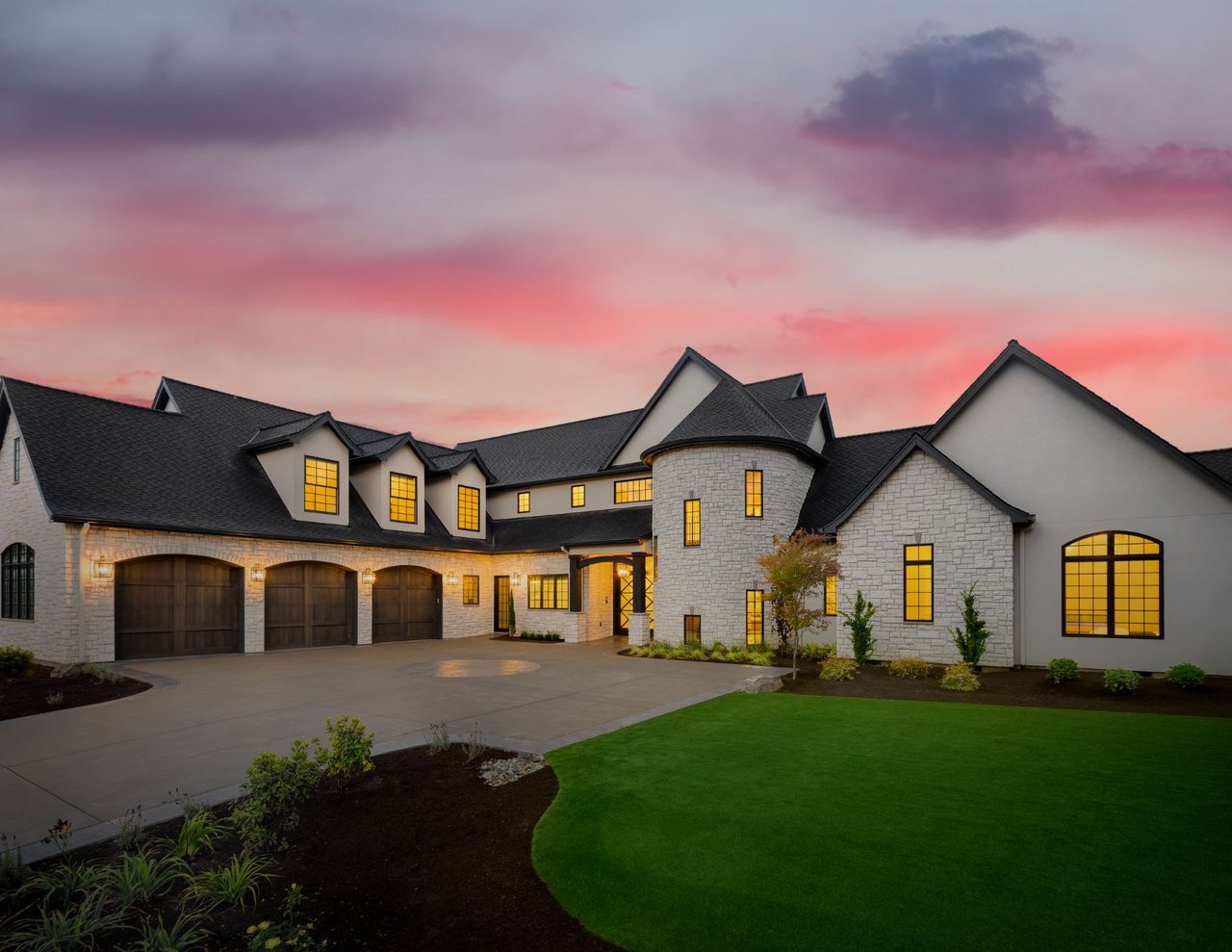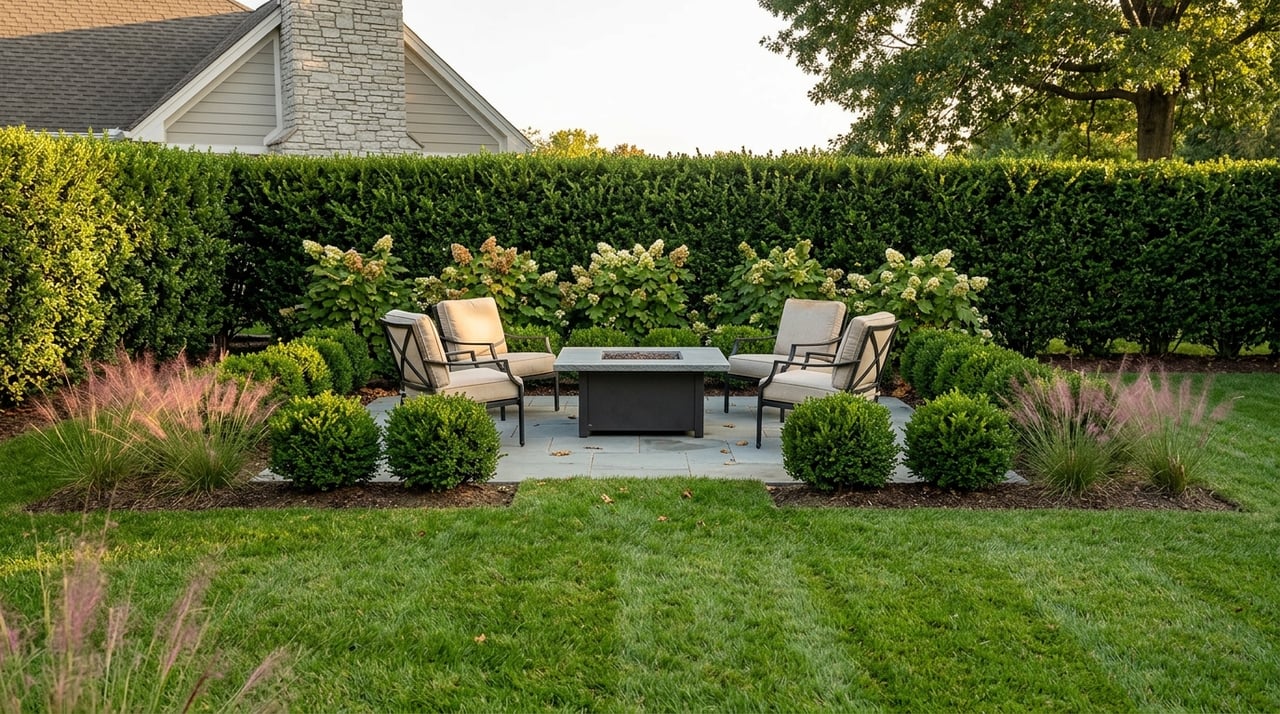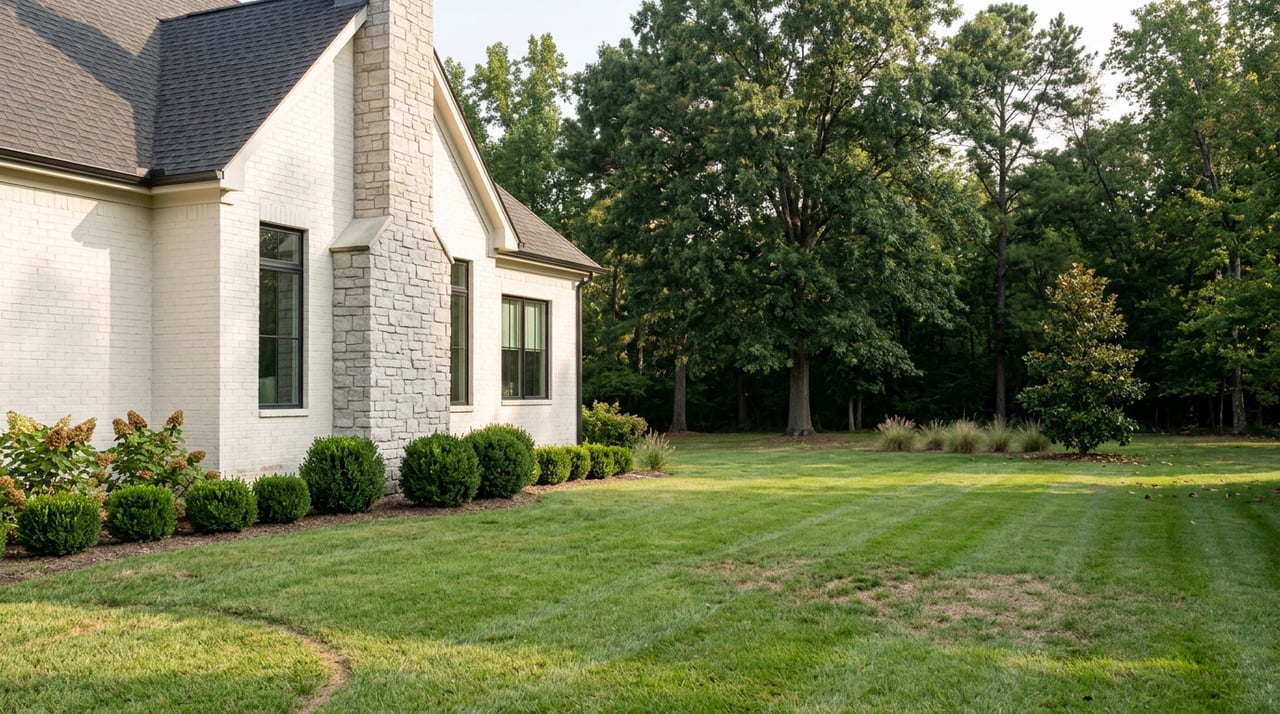
A buyer closes on a one-acre lot in Milton with big plans. A pool next summer, maybe a fire pit and a real deck off the kitchen. The house already sits on the lot at 5,000-plus square feet, the way most new construction here does now. Eight months later, that buyer is on the phone with a contractor who's doing the lot-coverage math and coming up short. The acre was real. The room to build on it wasn't what they assumed.
That gap between what an acre promises and what it delivers is the thing worth understanding before you shop Milton against Alpharetta, Cumming, or anywhere else in North Fulton that trades on space. An acre in Milton is not one fixed unit of buildable land. It is a number that gets filtered through zoning math, and in 2026 the city rewrote a meaningful part of that math while you were watching listings.
The math nobody puts on the flyer
Virtually all residential land in Milton is zoned AG-1, the district built to protect the city's rural, low-density character. AG-1 caps how much of a lot can be covered by impervious surface, house, driveway, patio, pool deck, at 20 percent on public roads and 25 percent on private ones. That's the ceiling regardless of how many acres you're standing on.
The problem the city found in its own numbers: builders have been getting close to that ceiling before the second owner ever shows up. City staff ran a five-year case study spanning 2021 through 2025 and found average home size in Milton had climbed past 5,200 square feet while average lot size had shrunk to 1.86 acres over the same stretch. Bigger houses, smaller lots, same coverage cap. City Manager Steven Krokoff put the consumer-facing result plainly:
"With builders maxing out a lot's impervious surface area, new homeowners often are left frustrated that they can't make additions, like a pool or deck."
That's not a hypothetical. That's the documented pattern the city cited when it decided its own subdivision rules needed a rewrite.
How the city got here
The timeline matters if you're trying to figure out which version of Milton's rules apply to a property you're looking at right now.
- January 2026 — Milton enacted a moratorium on new applications for minor-plat subdivisions creating lots under 3 acres in AG-1 zoning, pausing the process the city itself later said was producing problems.
- February 9, 2026 — Council extended that moratorium after staff presented the five-year trend data on lot size, building footprint, and coverage. Deputy Community Development Director Tracie Wildes told the meeting the pattern was larger homes and more amenities landing on essentially the same-sized lots.
- April 13, 2026 — Council voted unanimously to lift the moratorium and adopt a new set of subdivision requirements aimed at catching these problems before closing rather than after.
Roughly three months from freeze to fix, which is fast for a zoning code rewrite, and a sign the city considered this an active problem rather than a housekeeping item.
The rules that came out the other side
The package the council adopted in April did two things. It added a buffer, and it moved the paperwork earlier in the process.
The buffer: a new 20-foot natural-area setback along roads for any new minor plat, meant to preserve the tree line and rural sightlines that Milton markets itself on.
The paperwork: new lots created through minor plats now require a Foundation Survey once lot coverage comes within 5 percentage points of the maximum allowed, or within 5 feet of the minimum setbacks. Before a certificate of occupancy is issued, the builder also has to produce an As-Built Survey documenting impervious surfaces, the final lot-coverage calculation, and setback compliance. That's the fix for the pool-and-deck problem specifically. The coverage math now has to be verified in writing before anyone moves in, not discovered by a homeowner with a contractor's tape measure a year later.
The city also cleaned up a quieter but telling piece of process. Under Milton's code, subdivisions of four or more lots go through the major plat process, which gets more thorough review earlier, often before lots are sold. Subdivisions of one to three lots go through the minor plat process, which moves faster up front. As city staff described it plainly in briefing materials: minor plats move faster up front, with more issues commonly identified later during permitting, sometimes after lots have already been sold. That single sentence explains why a buyer could close on a compliant-looking lot and still run into a coverage wall months later. The review that would have caught it was structurally backloaded.
What the city pays you to keep whole
Milton isn't only restricting what happens to land under 3 acres. It's actively paying people not to cut their land into smaller pieces in the first place, through a separate initiative the city calls its Large Lot Incentives program. The city defines a "large lot" as 3 acres or bigger, and the incentives are built for owners who hold at that size or larger:
- Expedited administrative approval for covered riding arenas on properties of 10 acres or more
- Expedited approval for home-based businesses run out of an accessory structure
- Stormwater-related credits and special design considerations
- A waived occupational tax certificate fee for commercial horse farms
- A vegetative buffer requirement when new multi-home development borders an existing large lot, protecting that owner's privacy
- Permission to rebuild existing barns and run-in sheds without a separate Board of Zoning Appeals approval
- A more systematic Agricultural Exemption process for legitimate farming use
There's a tax lever behind this too. Fulton County administers the state's Conservation Use Value Assessment for qualifying agricultural parcels in Milton, which can tax land at its agricultural value rather than its development value. Owners looking at a longer horizon can also place land in a permanent conservation easement through the city's Transfer of Development Rights program.
Read together, the incentive structure and the new minor-plat rules are two sides of the same policy. One track makes it harder to slice a large lot into smaller ones without the coverage math catching up to you. The other pays you to not slice it at all. If you're comparing "acreage" as a line item across Milton properties, ask which side of that line the parcel sits on, because it changes what's actually protected long-term.
The acre still has a utility bill
Space in Milton comes with an operating cost that a lot of suburban buyers haven't budgeted for: if you're not paying for sewer service here, you're very likely on a septic system, and the city is direct about whose job that is. Per Milton's own utilities page, it is the homeowner's responsibility to maintain, repair, and replace every component of that system.
Georgia doesn't require a point-of-sale septic inspection at the state level, but that rarely matters in practice, because FHA, VA, and most conventional lenders require proof of a functioning system before they'll fund the loan. A standard Performance Evaluation Report from a certified inspector runs roughly $400 to $600 in Georgia, and a system that fails that evaluation can pull $10,000 to $30,000 off a negotiated price. Georgia's minimum setbacks for a septic system, 50 feet from the tank and 100 feet from the drain field, are also worth checking against the buildable envelope you're already calculating for the pool, since both are competing for the same acre.
None of this makes an acre in Milton a bad purchase. It makes it a purchase with more moving parts than the listing photo shows.
What this changes if you're cross-shopping Milton
If you're comparing Milton's lot sizes against a subdivision in Alpharetta or Cumming, the acreage number alone won't tell you what you can actually build. Ask three questions before you get attached to a specific property: was this lot created through a minor plat or a major plat, and when. Is it a "qualified" subdivision under the post-April rules, meaning it went through the newer coverage math, or was it platted before the moratorium. And is the parcel on septic or county sewer, since that changes both your ongoing responsibility and how much of your buildable envelope is already spoken for.
Even inside Milton, the rules aren't uniform. Down in Crabapple, the zoning and design standards differ from the acre-lot rules that govern most of the city, which is why that village's smaller, walkable lots look nothing like the subdivisions everywhere else in Milton. Knowing which code applies to a given address is the difference between an acre that delivers on its promise and one that doesn't.
A few questions worth asking directly
Does the April 2026 rule change affect a home that was already built and sold? The new Foundation and As-Built Survey requirements apply to new construction moving through the minor plat process going forward. A completed home isn't retroactively re-surveyed, but the coverage math on that property is still fixed by whatever AG-1 limits applied when it was built, so the same 20 or 25 percent ceiling still governs what you can add later.
What counts as a "qualified subdivision" under Milton's 2026 changes? The narrower rules the city has been refining apply specifically to smaller subdivisions carved out of AG-1 land, generally 30 lots or fewer, with each parcel under 3 acres and a single access point in and out. A standalone multi-acre estate lot outside that kind of subdivision sits under the general AG-1 rules, not this newer package.
Is a Milton acre still worth the premium compared to a similar lot elsewhere in North Fulton? That depends on what you're solving for. If privacy, tree canopy, and long-term protection from subdivision are the point, the large lot incentive structure is actively working in your favor. If you're buying primarily for buildable outdoor space, the coverage cap means you should verify the math before you buy, not after.
Milton's zoning story in 2026 isn't a reason to avoid the city. It's a reason to ask sharper questions before you fall for a specific lot. Occasio Collective works these parcels and their paperwork daily, and can tell you before you write an offer whether the acre in front of you actually has room for what you're picturing. Reach out to Occasio Collective to receive exclusive listings and get a straight read on what a specific lot will actually let you build.